Introduction
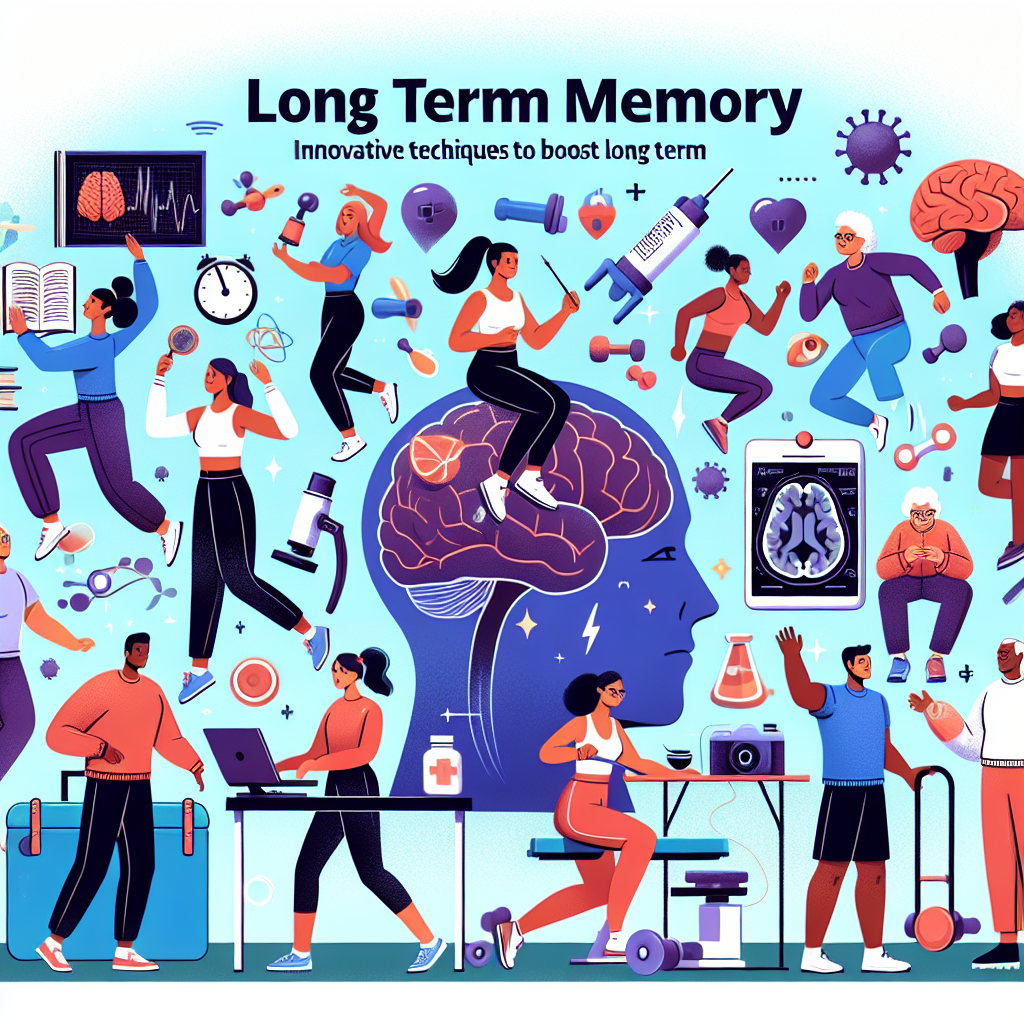
In today’s fast-paced world, the ability to retain information is more crucial than ever. Whether you’re a student gearing up for finals, a professional seeking to climb the corporate ladder, or simply someone wanting to recall the lines of your favorite song, memory plays a vital role in our daily lives. Fortunately, science has paved the way for innovative techniques to boost your long term memory—backed by science. This article delves deeply into these fascinating techniques, providing insights that can reshape your understanding of memory and equip you with proven strategies to enhance your cognitive abilities.
Understanding Long Term Memory
Before we explore the innovative techniques, it’s essential to understand what long-term memory is. Long-term memory is our system for storing, managing, and retrieving information over extended periods, sometimes even a lifetime. Unlike short-term memory, which holds information for a brief window, long-term memory involves various processes such as encoding, storage, and retrieval.
The Science Behind Long Term Memory
According to neuroscientific research, long-term memory formation involves physical changes in the brain, known as synaptic plasticity. This process primes the brain to create connections between neurons, which are vital for storing information over the long haul. The more we engage with information, the richer these connections become.
Innovative Techniques to Boost Your Long Term Memory—Backed by Science
1. The Power of Spaced Repetition
Spaced repetition is a technique based on the idea that information is more effectively remembered when it is learned and reviewed over spaced intervals, rather than in a single, concentrated session.
Case Study: The Effectiveness of Spaced Learning
A study published in the journal Psychological Science showed that students using spaced repetition techniques scored significantly higher on tests compared to those who crammed. This method exploits the brain’s ability to retain information more efficiently when it’s encountered multiple times over growing intervals.
How to Implement It
- Use flashcards spaced over increasing intervals.
- Set reminders to review material daily, weekly, and monthly.
2. Mind Mapping: Visualizing Connections
Mind mapping is a visual tool that helps organize and represent ideas. This method improves memory retention by leveraging the brain’s natural inclination towards imagery and association.
Case Study: Mind Mapping in Education
Research published by the Journal of Educational Psychology suggested that students who used mind maps performed better on exams than their peers who relied solely on traditional note-taking. Visual diagrams foster connections, enhancing retrieval paths in long-term memory.
How to Implement It
- Start with a central idea and branch out into subtopics.
- Utilize colors and images to make your mind map visually engaging.
3. Chunking Information
Chunking involves breaking down large amounts of information into smaller, more manageable units. This approach reduces cognitive load and makes recall easier.
Case Study: Memory Kaufman’s Trial
In a landmark study, psychologist George A. Miller demonstrated that people could only hold about seven chunks of information in their short-term memory at once. By organizing data into chunks, information transitions to long-term memory more easily.
How to Implement It
- Break down phone numbers into segments (e.g., 123-456-7890).
- Group related information together for easier recall.
4. Engaging Multiple Senses
Utilizing various senses—visual, auditory, and kinesthetic—can substantially increase memory retention. The technique is rooted in the Dual Coding Theory, which suggests that combining verbal and visual information can enhance understanding.
Case Study: Multisensory Learning and Retention
A study in Neuroscience Letters showed that students who engaged multiple senses while studying scored significantly higher in retention tests.
How to Implement It
- Use videos, podcasts, and hands-on activities during learning.
- Summarize what you learn by speaking it out loud, writing it down, and drawing.
5. The Feynman Technique
Developed by physicist Richard Feynman, this technique involves explaining concepts in simple terms, as if teaching someone else. This strategy helps clarify understanding and identify gaps in knowledge.
Case Study: Students Using the Feynman Technique
A paper in the Journal of Science Education highlighted that students who taught others retained significantly more information than those who did not.
How to Implement It
- Choose a topic and write an explanation in simple terms.
- Use analogies to reinforce your understanding.
6. Emotional Engagement
Memories tied to emotional experiences are often easier to recall. This phenomenon takes advantage of the amygdala’s role in encoding memories linked to strong emotions.
Case Study: The Role of Emotion in Memory
Research by the Journal of Cognitive Neuroscience found that participants remembered emotionally charged words more effectively than neutral ones, indicating the power of emotion on memory consolidation.
How to Implement It
- Create stories around the material you wish to remember.
- Associate emotions with the content by visualizing scenarios that elicit feelings.
7. The Method of Loci (Memory Palace)
A technique with roots in ancient Greece, the Method of Loci involves visualizing spatial environments to recall information sequentially.
Case Study: The Memory Palace in Action
A renowned documentary featured a memory champion who used the Method of Loci to remember the order of a deck of cards. This powerful visualization significantly boosted his performance at competitions, emphasizing how spatial relationships aid memory.
How to Implement It
- Visualize a familiar place (like your home) and associate different pieces of information with specific locations.
- Walk through that space mentally to retrieve those memories.
8. Healthy Lifestyle Choices
Your physical health dramatically impacts cognitive function, and certain lifestyle choices can enhance memory retention.
The Science of Diet and Memory
Numerous studies have shown that omega-3 fatty acids, antioxidants, and a diet rich in fruits and vegetables can support brain health. The Neurobiology of Aging journal notes that poor diet correlates with declining cognitive function.
How to Implement It
- Incorporate nuts, fish, and leafy greens into your meals.
- Regularly engage in physical activities to improve overall brain health.
Conclusion
In summation, innovative techniques to boost your long term memory—backed by science—are not just theories; they are proven methods that can transform your cognitive abilities. Incorporate spaced repetition, visualization, emotional engagement, and more into your learning routine. The journey to memory mastery is continuous yet rewarding, filled with possibilities for personal and professional growth.
Final Thoughts
Embrace curiosity, challenge yourself to learn, and remember that your capacity for memory is less about inherent talent and more about the techniques you use. Armed with these strategies, you can unlock the full potential of your mind!
FAQs
1. What is long-term memory?
Long-term memory refers to the storage of information over extended periods, which allows for the recall of experiences, knowledge, and skills over time.
2. How does spaced repetition work?
Spaced repetition leverages the idea of reviewing material at gradually increasing intervals to strengthen memory and retention.
3. Can diet influence memory?
Yes, a balanced diet rich in omega-3s and antioxidants can significantly enhance cognitive function and memory retention.
4. How effective is the Feynman technique?
The Feynman technique is highly effective as it emphasizes teaching others, clarifying understanding, and identifying gaps in knowledge.
5. What role does emotion play in memory?
Emotionally charged experiences are generally easier to remember because the brain encodes them more deeply, aided by the amygdala.
With these innovative techniques at your disposal, embark on a journey of memory mastery that can last a lifetime!
About the Author


The PsyForU Editorial Collective is the research and editorial team of PsyForU Research International. The collective prepares educational, psychological, mental-health-awareness, inclusion, neurodiversity, and research-methodology content for students, parents, educators, researchers, and general readers. PsyForU content is intended for awareness, education, and capacity-building and should not be treated as clinical diagnosis, therapy, medical advice, legal advice, or emergency mental-health support.