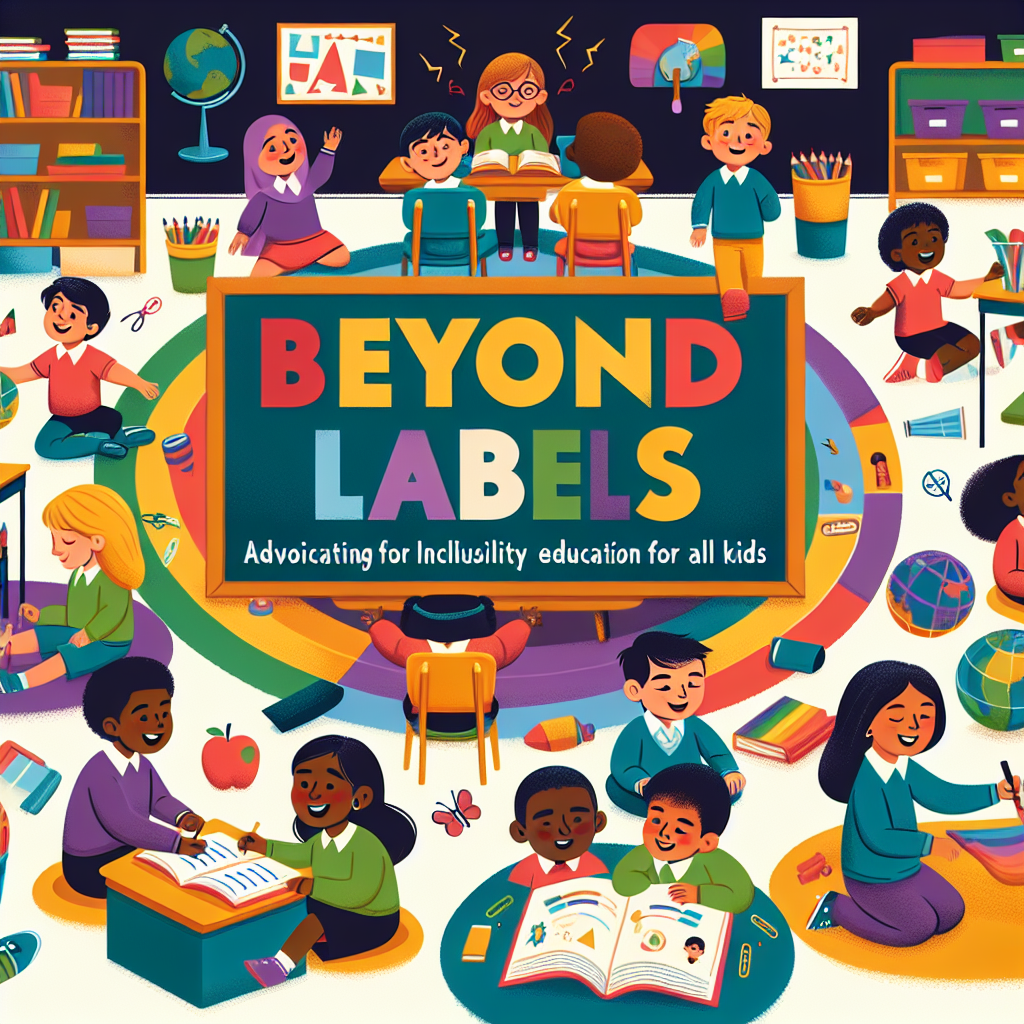
Beyond Labels: Advocating for Inclusivity in Education for All Kids
Introduction
In a world increasingly shaped by diversity, the quest for an inclusive education system is more vital than ever. Beyond Labels: Advocating for Inclusivity in Education for All Kids serves as a guiding mantra for educators, parents, and policymakers alike. Imagine a classroom where every child, regardless of their background or learning abilities, receives the tools and support they need to thrive. This is not just a dream; it’s a necessity. Inclusivity transforms education from a one-size-fits-all approach into a multifaceted experience that celebrates each child’s individuality while fostering a sense of belonging.
The time to move beyond labels is now. This article will explore why advocating for inclusivity is essential, how we can achieve it, and what practical steps can be taken to create a nurturing environment for all kids.
The Importance of Inclusivity in Education
Understanding Inclusivity
Inclusivity in education means providing opportunities for all students to learn together, regardless of their abilities, backgrounds, or identities. This goes beyond traditional special education models, which often separate children based on perceived deficits. Instead, it envisions a framework where differences enrich the learning experience and all kids benefit from the diversity present within the classroom.
The Benefits of an Inclusive Educational Approach
Here are several critical benefits of fostering inclusivity in educational settings:
Enhanced Social Skills: When kids learn alongside their peers, they develop important social skills such as empathy, cooperation, and communication.
Improved Academic Outcomes: Research shows that inclusive classrooms can lead to better academic performance. Students with disabilities often thrive in environments where they are supported by their peers.
Fostering Acceptance: A culture of inclusivity reduces stigma. Kids learn from a young age to embrace differences, laying the groundwork for a more harmonious society.
- Critical Life Skills: Inclusivity teaches kids about diversity and adaptability, helping them navigate a world that is anything but homogenous.
Case Study: The Unified School District
In 2019, the Unified School District implemented an inclusion program aimed at increasing the number of students with disabilities in general education classrooms. The success metrics were staggering. Within two years, student test scores had increased by 15% in math and reading. The program emphasized collaborative teaching methods, allowing both special education and general education teachers to work together to tailor their teaching strategies to meet diverse learning needs. This model illustrates how beyond labels in education can lead to measurable success.
Strategies for Implementing Inclusivity
Training Educators
Training is crucial to advocate for inclusivity effectively. Teachers must be equipped with the right tools and knowledge to accommodate diverse learners.
Professional Development Workshops: Initiatives that focus on inclusive teaching methods can empower educators with strategies for differentiation and engagement.
- Peer Mentorship Programs: Pairing novice teachers with experienced veterans who have a history of inclusive practices can foster knowledge sharing and build confidence.
Curriculum Design
Curriculum plays a pivotal role in establishing an inclusive environment. Here are transformative approaches:
Universal Design for Learning (UDL): This principle advocates for flexible approaches to teaching that accommodate individual learners’ strengths and weaknesses.
- Culturally Responsive Teaching: Integrating diverse perspectives into the curriculum not only validates students’ identities but also enhances engagement.
Community Involvement
Inclusion is not just about the classroom; it extends to the community. Strategies include:
Parent Workshops: By informing parents about the benefits of inclusivity, schools can build a supportive network around inclusive practices.
- Collaboration with Local Organizations: Partnering with local organizations that advocate for special needs can strengthen community ties and enrich the educational experience for all kids.
Case Study: Hillside Academy
Hillside Academy decided to incorporate UDL principles into their curriculum design in 2021. They offered various formats for assignments—written, visual, and oral presentations—allowing students to choose how they demonstrated their understanding. As a result, student engagement soared, with 90% of the student body participating in their end-of-year projects. This case highlights that beyond labels, every child has unique talents that can shine in an accommodating environment.
Data-Driven Insights
The Statistics Behind Inclusivity
| Factor | Statistic |
|---|---|
| Academic Performance | 15% increase in test scores in inclusive settings |
| Social Skills | 40% improvement in conflict resolution skills |
| Acceptance Rate | 85% of peers reported positive interactions in inclusive environments |
These positive outcomes not only advocate for marginalized groups but enhance the educational experience for all children. The figures underscore the pivotal role that inclusive practices provide—teaching us to truly move beyond labels.
National Trends
The trend toward inclusivity in education is gaining traction nationwide. According to the National Center for Education Statistics (NCES), the percentage of students with disabilities who are included in general education classrooms has steadily increased from 42% in 2000 to over 60% in 2023. This upward trajectory illustrates a growing recognition of the importance of inclusive practices and the vast potential they hold for enriching educational experiences.
Overcoming Common Challenges
Resistance to Change
One of the primary obstacles to inclusivity is resistance from educators who fear a shift in traditional methods.
- Solution: Implement gradual changes and provide ample support through workshops and mentorship.
Lack of Resources
Many schools lack the necessary resources to implement inclusive strategies effectively.
- Solution: Schools should seek funding opportunities, such as grants dedicated to inclusive practices, and foster partnerships with local businesses and nonprofits.
Limited Knowledge and Training
Not all educators are trained in inclusive methods, which can hinder effective implementation.
- Solution: Ongoing professional development is necessary to instill inclusive teaching strategies, focusing on differentiated instruction and classroom management.
Conclusion
The imperative to advocate for inclusivity in education for all kids is stronger than ever. Beyond labels, it is about recognizing the unique potential within every child and creating an environment where everyone can thrive. By training educators, designing thoughtful curricula, involving the community, and addressing common challenges, we can work together to ensure that no child is left behind.
The journey toward inclusivity may be challenging, but the rewards are immeasurable. Let’s take actionable steps today and create a future where every child feels valued, invested in, and inspired to learn.
FAQs
1. What is the importance of inclusive education?
Inclusivity promotes a sense of belonging, enhances academic performance, and helps foster social skills among diverse students.
2. How can parents advocate for inclusivity in schools?
Parents can involve themselves by attending school meetings, sharing their children’s needs with teachers, and promoting community workshops on inclusivity.
3. Are there benefits for neurotypical students in inclusive classrooms?
Yes, neurotypical students gain enhanced social skills, increased empathy, and improved problem-solving abilities by interacting with diverse peers.
4. How can schools ensure their curriculums are inclusive?
Schools can implement Universal Design for Learning, integrate culturally responsive content, and ensure varied assessment methods.
5. What role does the community play in advocating for inclusivity in education?
The community can provide resources, support local advocacy initiatives, and collaborate with schools to foster an inclusive atmosphere.
By focusing on Beyond Labels: Advocating for Inclusivity in Education for All Kids, we can reframe the narrative around education. It’s time to build schools that reflect the richness of our society, where every child is celebrated and empowered to reach their highest potential. Let us all be advocates for a more inclusive future!
About the Author