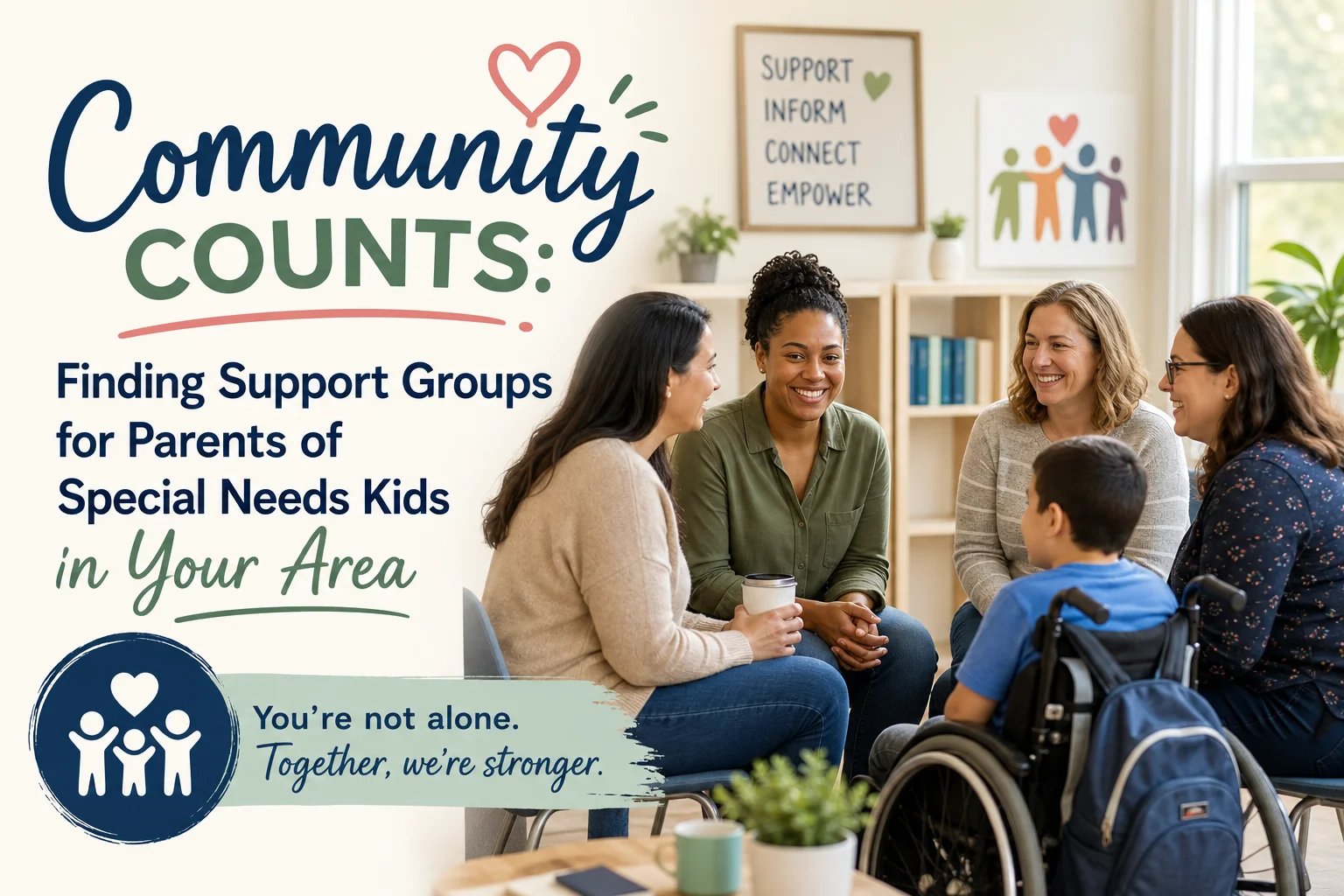
The Essential Guide to Community Counts: Finding Support Groups for Parents of Special Needs Kids in Your Area
Introduction: You Were Never Meant to Do This Alone
Parenting a child with special needs can be deeply beautiful, fiercely meaningful, and—if we’re honest—exhausting in ways many people never see.
There are appointments to schedule, evaluations to understand, therapies to coordinate, school meetings to prepare for, behaviors to decode, insurance forms to fight through, and emotional highs and lows that can change by the hour. Even the most loving families can feel isolated when friends, relatives, or neighbors simply do not understand the daily reality.
That is why Community Counts: Finding Support Groups for Parents of Special Needs Kids in Your Area is more than a helpful topic—it is a lifeline.
The right parent support group can offer what no brochure, diagnosis packet, or online search can fully provide: real people who understand. People who know what an IEP meeting feels like. People who can recommend a speech therapist, sensory-friendly dentist, disability attorney, inclusive summer camp, or respite care provider. People who will celebrate progress that others might miss.
This guide is designed to help you find that kind of community—locally, practically, and confidently. Whether your child has autism, ADHD, Down syndrome, cerebral palsy, developmental delays, medical complexity, learning disabilities, sensory processing differences, mental health challenges, or multiple diagnoses, support exists. The key is knowing where to look, what to ask, and how to choose a group that truly fits your family.
Because in the world of special needs parenting, community counts—and the right support can change everything.
Why Community Counts for Parents of Special Needs Kids
When people talk about support groups, they often imagine a circle of chairs in a church basement or a Facebook group full of questions and comments. Those can absolutely be part of it. But the value of support groups goes much deeper.
A strong parent support community can help you:
| Area of Need | How Support Groups Help |
|---|---|
| Emotional support | Parents can share fears, frustrations, grief, hope, and victories without judgment. |
| Practical guidance | Families exchange recommendations for therapists, schools, specialists, and services. |
| Advocacy skills | Parents learn how to navigate IEPs, 504 plans, insurance appeals, and disability rights. |
| Resource connection | Groups often know about grants, respite programs, camps, and local nonprofits. |
| Social belonging | Families meet others who understand their child’s needs and family lifestyle. |
| Crisis resilience | During hard seasons, other parents can provide encouragement and direction. |
The phrase Community Counts: Finding Support Groups for Parents of Special Needs Kids in Your Area captures something many families discover only after years of struggling alone: information matters, but connection is what keeps you going.
A diagnosis may explain your child’s challenges. A support group can help you live through them with more confidence, less isolation, and better tools.
The Emotional Reality: Why Parents Need Parent-to-Parent Support
Parents of children with disabilities or developmental differences often carry a hidden mental load. You may be tracking medications, therapy goals, sensory triggers, communication tools, school accommodations, medical records, and behavioral patterns all at once.
You may also be managing feelings that are difficult to say out loud:
- “I love my child completely, but I am tired.”
- “I feel guilty that I need a break.”
- “I’m scared about the future.”
- “No one in my family understands.”
- “I don’t know if I’m doing enough.”
- “I don’t even know what help to ask for.”
This is where finding support groups for parents of special needs kids in your area becomes essential. A good group gives you a place where you do not have to translate your life. You can say “We had a rough sensory day,” “The IEP meeting was awful,” or “My child finally tolerated a haircut,” and people get it.
That shared understanding can reduce shame and loneliness. It can also normalize the emotional complexity of special needs parenting. You are allowed to feel love, pride, exhaustion, grief, joy, anger, hope, and uncertainty—sometimes all in one afternoon.
What Counts as a Support Group?
When exploring Community Counts: Finding Support Groups for Parents of Special Needs Kids in Your Area, it helps to broaden your definition of support.
A support group does not have to look one specific way. It might be formal or informal, diagnosis-specific or general, online or in person, parent-led or professionally facilitated.
Common Types of Support Groups
| Type of Group | Best For | Possible Limitations |
|---|---|---|
| Diagnosis-specific groups | Parents seeking targeted advice for autism, Down syndrome, ADHD, etc. | May not fit children with multiple or unclear diagnoses. |
| General special needs parent groups | Families who want broad emotional and practical support. | Advice may be less specific. |
| School-based parent groups | Local education advocacy, IEP tips, school resources. | May focus mainly on one district. |
| Hospital or clinic groups | Medical support, condition-specific education, provider referrals. | May be limited to patients or certain diagnoses. |
| Online local groups | Convenience, quick recommendations, flexible participation. | Quality and moderation vary. |
| Faith-based groups | Spiritual encouragement and family support. | May not fit every belief system. |
| Advocacy organizations | Rights-based training, policy updates, educational support. | May feel more formal than emotional. |
| Recreational or activity-based groups | Social connection through playdates, sports, art, or outings. | May not provide deep parent discussion time. |
The best approach is often a combination. For example, you might join a local autism parent group, a statewide special education advocacy network, and a small informal coffee meetup with parents from your child’s therapy clinic.
The Benefits of Local Support Groups Versus Online-Only Communities
Online groups can be incredibly useful. They are available at 2 a.m., which is sometimes exactly when parents need help. They also allow families in rural areas or medically complex situations to connect without travel.
But local groups offer something online-only communities often cannot: area-specific knowledge.
When focusing on Community Counts: Finding Support Groups for Parents of Special Needs Kids in Your Area, local information is gold.
A parent in your city may know:
- Which pediatric dentist is patient with sensory-sensitive kids
- Which school administrator understands assistive technology
- Which occupational therapist has a six-month waiting list
- Which playgrounds are wheelchair accessible
- Which summer camps provide one-on-one aides
- Which Medicaid waiver office returns calls
- Which local attorneys handle guardianship or special needs trusts
- Which restaurants are calmer during off-peak hours
That kind of knowledge is hard to find in national forums. Local parent networks can shorten your learning curve dramatically.
Local vs. Online Support: A Quick Comparison
| Feature | Local Support Groups | Online Support Groups |
|---|---|---|
| Local referrals | Excellent | Limited unless locally focused |
| Emotional connection | Strong, especially in person | Strong but variable |
| Convenience | Requires scheduling/travel | Highly convenient |
| Privacy control | Depends on setting | Depends on platform |
| Crisis support | Can mobilize practical help | Can provide immediate advice |
| Social opportunities for kids | Often available | Usually limited |
| Accessibility | May vary by location | Easier for homebound families |
The ideal solution is not necessarily local or online. It is often both.
Where to Start: The Best Places to Find Support Groups Near You
If you are wondering how to begin finding support groups for parents of special needs kids in your area, start with places already connected to families like yours.
1. Your Child’s School or Early Intervention Program
Schools often know about local parent groups, special education advisory councils, family resource nights, and district-sponsored workshops.
Ask:
- “Are there parent support groups for families of children with IEPs or 504 plans?”
- “Does the district have a special education parent advisory committee?”
- “Are there local organizations you recommend?”
- “Do other parents meet informally?”
If your child is under age three, ask your early intervention coordinator about parent-to-parent networks. Many early intervention programs partner with family support agencies.
2. Pediatricians, Therapists, and Specialists
Your child’s pediatrician, occupational therapist, speech therapist, physical therapist, psychologist, developmental pediatrician, neurologist, or social worker may know of local groups.
Try asking:
“Do you know of any support groups for parents of children with similar needs in this area?”
Therapy clinics are especially useful because they often serve many families facing similar challenges. Some host their own parent workshops or playgroups.
3. Hospitals and Children’s Medical Centers
Children’s hospitals frequently offer condition-specific programs for families dealing with complex medical needs, developmental disabilities, genetic syndromes, feeding challenges, epilepsy, cancer, mobility differences, and more.
Look for departments such as:
- Family resource centers
- Social work departments
- Child life services
- Developmental medicine clinics
- Rehabilitation programs
- Behavioral health departments
4. Local Disability Nonprofits
Many communities have nonprofit organizations focused on disability services, family advocacy, recreation, respite, or inclusion.
Search for:
- “disability family support near me”
- “special needs parent support group near me”
- “autism parent group in [your city]”
- “Down syndrome association [your state]”
- “special education advocacy group [your county]”
- “parent training center disability [your state]”
This is a core step in Community Counts: Finding Support Groups for Parents of Special Needs Kids in Your Area because nonprofits often serve as community hubs.
5. Parent Training and Information Centers
In the United States, every state has Parent Training and Information Centers, often called PTIs. These organizations help families understand special education law, disability rights, IEPs, evaluations, and school services.
They may offer:
- Workshops
- Webinars
- One-on-one guidance
- Parent leadership training
- Local referrals
- Support networks
If you are outside the U.S., look for equivalent family advocacy or disability rights organizations in your region.
6. Libraries, Community Centers, and Recreation Departments
Local libraries and community centers often host inclusive events, sensory story times, disability resource fairs, and parent education sessions.
Your parks and recreation department may offer adaptive sports, inclusive swim lessons, accessible playground programs, or family meetups.
7. Faith Communities
Many churches, synagogues, mosques, temples, and spiritual communities offer disability ministries, respite nights, inclusive children’s programs, or parent groups.
Even if you are not looking for faith-based support, these programs may connect you with other families and local resources.
8. Social Media and Local Online Forums
Facebook groups, Meetup, Reddit communities, neighborhood apps, and local parenting forums can help you find support quickly.
Search phrases like:
- “special needs parents [city]”
- “autism moms [county]”
- “IEP support [state]”
- “disabled children parent group [city]”
- “neurodivergent kids parents [area]”
- “medical moms [region]”
When using online spaces, check moderation quality, privacy rules, and whether the group culture feels respectful.
Example Keyword Variations for Search and SEO Context
If you are researching Community Counts: Finding Support Groups for Parents of Special Needs Kids in Your Area, these long-tail variations can help you search more effectively:
| Keyword Variation | Best Use |
|---|---|
| support groups for parents of special needs children near me | General local search |
| local special needs parent support groups | Broad community resources |
| autism parent support groups in my area | Diagnosis-specific search |
| special education parent advocacy groups near me | School and IEP support |
| disability family support organizations nearby | Nonprofit and service referrals |
| parent groups for children with developmental delays | Early childhood and therapy networks |
| support for parents of medically complex children | Hospital and medical networks |
| inclusive family activities for special needs kids near me | Social and recreational connection |
| IEP parent support group near me | Education-focused help |
| special needs community resources in my county | County-level resource search |
Using variations of Community Counts: Finding Support Groups for Parents of Special Needs Kids in Your Area helps you find both formal programs and informal parent communities.
How to Evaluate Whether a Support Group Is Right for You
Not every group will be the right fit. That is normal.
Some groups are warm and constructive. Others may feel overwhelming, negative, disorganized, or too focused on one approach. The goal is not just to find any group—it is to find a healthy group.
Signs of a Strong Support Group
| Positive Sign | Why It Matters |
|---|---|
| Clear purpose | Members understand whether the group is emotional, educational, advocacy-focused, or social. |
| Respectful communication | Parents can disagree without judgment or hostility. |
| Confidentiality expectations | Families feel safer sharing personal experiences. |
| Inclusive language | Children and families are treated with dignity. |
| Practical resource sharing | Members exchange useful local information. |
| Balanced tone | The group allows hard conversations while also encouraging hope. |
| Good moderation | Leaders prevent misinformation, bullying, and spam. |
| Accessibility | Meetings consider transportation, language, disability access, and scheduling barriers. |
Red Flags to Watch For
Be cautious if a group:
- Promotes miracle cures or unsafe treatments
- Shames parents for medication, therapy choices, schooling decisions, or diagnosis labels
- Allows personal attacks
- Shares private information without consent
- Pressures families into buying products
- Discourages professional medical or educational guidance
- Centers fear rather than support
- Excludes families who do not fit a narrow definition of disability
A support group should leave you feeling less alone—not more judged.
Questions to Ask Before Joining a Group
Before committing to a support group, reach out to the organizer or observe a meeting if possible.
Ask:
- Who is the group for?
- Is it diagnosis-specific or open to all special needs families?
- Are meetings in person, online, or hybrid?
- Is childcare available?
- Are siblings welcome?
- Is there a cost?
- Are discussions confidential?
- Is the group parent-led or professionally facilitated?
- Are meetings structured or informal?
- Does the group welcome newly diagnosed families?
- Is the space physically accessible?
- Are interpreters or translated materials available?
- Are fathers, grandparents, foster parents, and caregivers included?
- How does the group handle conflict or misinformation?
- Are there social events for children?
These questions are especially important when your goal is Community Counts: Finding Support Groups for Parents of Special Needs Kids in Your Area that genuinely supports your family’s needs.
Case Study 1: Maria Finds Her IEP Confidence
Maria’s eight-year-old son, Mateo, was diagnosed with ADHD and dyslexia. For two years, Maria attended school meetings feeling confused and intimidated. She knew Mateo needed more reading support, but she did not understand special education terminology.
After searching for special education parent support groups near me, Maria found a local parent advocacy nonprofit. The group met monthly at the public library and offered workshops on IEP goals, evaluations, accommodations, and parent rights.
At her first meeting, Maria listened quietly. By the third meeting, she brought Mateo’s IEP and asked questions. Another parent recommended requesting assistive technology and structured literacy intervention. A group facilitator helped Maria prepare a written request for updated testing.
At the next IEP meeting, Maria felt prepared. She asked specific questions, requested measurable goals, and advocated for evidence-based reading instruction.
Analysis: Why This Matters
Maria’s story shows the practical power of Community Counts: Finding Support Groups for Parents of Special Needs Kids in Your Area. Support groups do not just provide emotional comfort; they can help parents become stronger advocates. Local groups are especially valuable because they understand district procedures, nearby evaluators, and regional education resources.
Case Study 2: Jamal and Eric Build a Social Network for Their Daughter
Jamal and Eric’s daughter, Nia, has cerebral palsy and uses a wheelchair. They wanted her to have friends and community activities, but many local programs were not accessible. Birthday parties, playgrounds, and sports leagues often became stressful.
After asking Nia’s physical therapist about support groups for parents of special needs children near me, they were connected to an adaptive recreation group. The group hosted inclusive family picnics, wheelchair basketball clinics, accessible movie nights, and parent coffee chats.
For the first time, Nia attended events where accessibility was not an afterthought. Jamal and Eric met other parents who shared tips about adaptive equipment funding, accessible vans, and inclusive school field trips.
Analysis: Why This Matters
This case highlights that finding support groups for parents of special needs kids in your area is not only about parent education. It can also improve a child’s social life and sense of belonging. For families with mobility needs, local knowledge about accessible spaces is especially important.
Case Study 3: Leah Discovers Support After a New Autism Diagnosis
Leah’s four-year-old son, Oliver, was diagnosed with autism. The diagnosis brought relief, but also uncertainty. Leah spent hours online reading conflicting advice and felt increasingly overwhelmed.
A developmental pediatrician gave her a list of local resources, including an autism parent support group. Leah hesitated because she worried she would be judged for not knowing enough. But when she joined a virtual meeting hosted by a local nonprofit, she found parents at every stage—newly diagnosed families, parents of teens, and adults sharing lived experience.
The group helped Leah learn about speech therapy options, sensory-friendly haircuts, visual schedules, Medicaid waiver waitlists, and inclusive preschool programs. More importantly, she met two other parents nearby and began meeting them once a month for coffee.
Analysis: Why This Matters
Leah’s experience reflects the emotional side of Community Counts: Finding Support Groups for Parents of Special Needs Kids in Your Area. Newly diagnosed families often need both reliable information and reassurance. A well-run support group can reduce panic, replace confusion with direction, and help parents see a future with more hope.
Case Study 4: A Rural Family Creates Its Own Circle
The Thompson family lived in a rural county. Their son, Ben, had developmental delays and sensory processing challenges. The closest children’s hospital was two hours away, and local services were limited.
After repeatedly searching local special needs parent support groups without success, Ben’s mother, Ashley, asked the library if she could reserve a room for a monthly “special needs parent coffee hour.” She posted flyers at the pediatric clinic, therapy office, elementary school, and grocery store bulletin board.
The first month, only one other parent came. By month six, eight families were attending. Eventually, a speech therapist volunteered to speak, and the county recreation department asked for feedback on inclusive programming.
Analysis: Why This Matters
Sometimes Community Counts: Finding Support Groups for Parents of Special Needs Kids in Your Area means building the community you wish existed. Rural families may face fewer formal resources, but small parent-led groups can grow into powerful networks. Even two families sharing information can make a meaningful difference.
How to Use Schools as a Gateway to Parent Support
Schools can be complicated for special needs families. They can be sources of help, stress, confusion, or all three. But they are also one of the best places to locate other parents navigating similar systems.
School-Based Support Options
| School Resource | How It Can Help |
|---|---|
| Special Education Parent Advisory Council | Offers parent input to school districts and shares policy updates. |
| PTA/PTO inclusion committee | Helps make school events accessible and inclusive. |
| IEP workshops | Teaches parents about evaluations, goals, services, and rights. |
| Family resource nights | Connects families to local agencies and providers. |
| Transition planning events | Supports families preparing for adulthood, employment, or postsecondary options. |
| Parent mentor programs | Matches experienced parents with newer families. |
Ask your school district whether they have a parent advisory council or special education family liaison. If they do not, consider asking how one could be started.
A school-based path is a practical route for Community Counts: Finding Support Groups for Parents of Special Needs Kids in Your Area, especially if your biggest concerns involve IEPs, behavior plans, accommodations, transportation, or inclusion.
How Healthcare Providers Can Help You Find Community
Healthcare providers often see dozens or hundreds of families facing similar challenges, but parents may not realize they can ask providers about community support.
Try asking:
- “Do other families with this diagnosis have a local support network?”
- “Does the hospital offer a parent group?”
- “Is there a family navigator or social worker I can speak with?”
- “Are there local organizations you trust?”
- “Do you know of respite care resources?”
- “Are there condition-specific foundations in our region?”
Some clinics cannot directly connect families due to privacy rules, but they can provide organization names, flyers, resource lists, or referrals to social workers.
If your child has complex medical needs, ask about:
- Caregiver support programs
- Palliative care support services
- Medical social workers
- Family advisory councils
- Disease-specific foundations
- Transportation assistance
- Parent mentor programs
Healthcare settings are a major pathway for finding support groups for parents of special needs kids in your area, particularly for families managing ongoing medical care.
How to Find Support if Your Child Does Not Have a Diagnosis Yet
Many families are in the “in-between” stage. Something is going on, but there is no clear diagnosis. Maybe evaluations are pending. Maybe doctors disagree. Maybe your child has delays but no label.
You still deserve support.
Look for groups using broader terms:
- Developmental delay parent group
- Early intervention parent support
- Neurodivergent children parent group
- Special needs family support
- Sensory processing parent group
- IEP support group
- Disability parent network
You do not need a perfect diagnosis to seek community. Many parents in support groups remember the uncertainty of the early stage and are happy to help.
The heart of Community Counts: Finding Support Groups for Parents of Special Needs Kids in Your Area is not about labels. It is about connection, understanding, and practical help.
Support Groups for Different Needs and Diagnoses
Some families benefit from broad special needs communities, while others need diagnosis-specific spaces.
Common Diagnosis-Specific Groups to Search For
| Need or Diagnosis | Search Terms to Try |
|---|---|
| Autism | autism parent support group near me, autistic children family support |
| ADHD | ADHD parent group, executive function support parents |
| Down syndrome | Down syndrome association near me |
| Cerebral palsy | cerebral palsy family network, CP parent support |
| Dyslexia | dyslexia parent advocacy group, reading disability parent support |
| Epilepsy | epilepsy foundation local support group |
| Rare diseases | rare disease parent support, genetic condition family group |
| Medical complexity | medically complex children parent group |
| Mental health | parents of children with anxiety, depression, bipolar disorder, OCD support |
| Feeding challenges | feeding tube parent support, pediatric feeding disorder group |
| Hearing loss | deaf and hard of hearing family support |
| Vision impairment | blind/low vision children parent support |
| Intellectual disability | intellectual disability family support group |
For children with multiple diagnoses, you may need more than one group. For example, a parent might join both an autism group and a medical complexity group.
Building a Personal Support Map
One of the most useful tools in Community Counts: Finding Support Groups for Parents of Special Needs Kids in Your Area is a support map. This helps you identify where you already have help and where gaps remain.
Family Support Map
| Support Category | Who/What Helps Now? | Gap to Fill |
|---|---|---|
| Emotional support | Friend, therapist, parent group | Need parents who understand diagnosis |
| School advocacy | Teacher, special education coordinator | Need IEP training |
| Medical navigation | Pediatrician, specialist | Need insurance guidance |
| Respite | Grandparent once a month | Need trained respite provider |
| Social connection | Therapy clinic playgroup | Need inclusive weekend activities |
| Financial resources | None yet | Need grants/waivers information |
| Emergency support | Neighbor | Need backup care plan |
This map can guide your search. Instead of looking vaguely for “support,” you can look for specific help: advocacy, respite, emotional support, social activities, or medical guidance.
How to Attend Your First Support Group Meeting Without Feeling Awkward
Walking into a support group for the first time can feel intimidating. You may wonder:
- What if everyone already knows each other?
- What if my child’s needs are different?
- What if I cry?
- What if I do not know what to say?
- What if I hear stories that scare me?
These worries are normal.
Here are some simple ways to make the first meeting easier:
- Email the organizer beforehand and explain you are new.
- Ask whether you need to register.
- Bring a notebook for resources.
- Share only what feels comfortable.
- Listen first if you prefer.
- Give yourself permission to leave early.
- Try at least two meetings before deciding.
- Remember that everyone was new once.
You do not have to tell your whole story. You can simply say:
“Hi, I’m new. I’m here to learn and connect.”
That is enough.
Making Online Support Safer and More Useful
Online communities are often the easiest entry point for Community Counts: Finding Support Groups for Parents of Special Needs Kids in Your Area. However, online groups require thoughtful boundaries.
Tips for Online Support Groups
| Tip | Why It Helps |
|---|---|
| Review group rules before posting | Helps you understand culture and expectations. |
| Avoid sharing identifying details | Protects your child’s privacy. |
| Be cautious with medical advice | Always verify with qualified professionals. |
| Search old posts first | Many common questions have already been answered. |
| Watch for product-heavy groups | Some communities exist mainly to sell. |
| Notice emotional impact | Leave groups that increase anxiety or shame. |
| Use local groups for referrals | Ask for nearby providers, programs, and events. |
A healthy online group can be a bridge to in-person connection. Many local parent meetups begin with a simple online post: “Would anyone like to meet for coffee?”
The Role of Fathers, Grandparents, and Other Caregivers
Special needs parenting support is often marketed toward mothers, but fathers, grandparents, foster parents, adoptive parents, stepparents, and other caregivers need community too.
When searching for support groups for parents of special needs kids in your area, look for inclusive language. Some groups may even offer father-specific meetups, grandparent workshops, sibling support programs, or caregiver training.
Families are stronger when all caregivers have access to support.
Ways to Include More Caregivers
- Invite grandparents to educational workshops.
- Ask if groups welcome both parents.
- Look for sibling support programs.
- Encourage fathers to connect with other dads.
- Share resources with babysitters or respite providers.
- Include foster and kinship caregivers in discussions.
Support should reflect the whole family system, not just one parent.
Cultural, Language, and Accessibility Considerations
Not all families experience disability support systems in the same way. Culture, language, race, immigration status, income, transportation, and past experiences with institutions can affect whether families feel safe joining support groups.
A truly strong community considers:
- Multilingual resources
- Interpretation services
- Transportation barriers
- Disability access at meeting sites
- Childcare availability
- Respect for cultural views of disability
- Flexible meeting times
- Low-cost or free participation
- Trauma-informed facilitation
If a group does not currently offer what your family needs, it is okay to ask. Sometimes organizers simply have not considered the barrier yet.
Community Counts: Finding Support Groups for Parents of Special Needs Kids in Your Area should include all families—not only those with time, transportation, English fluency, or financial flexibility.
How Support Groups Help With Advocacy
One of the greatest benefits of parent groups is learning how to advocate without burning out.
Support groups can help parents understand:
- IEP and 504 plan processes
- Evaluation timelines
- Behavior intervention plans
- Assistive technology
- Related services such as speech, OT, and PT
- School placement options
- Transition planning
- Medicaid waivers
- Insurance appeals
- Disability benefits
- Guardianship and supported decision-making
- Inclusive recreation rights
Parents often learn best from other parents who have been through the process. A group can help you prepare questions, organize documents, and understand what is reasonable to request.
This is one reason Community Counts: Finding Support Groups for Parents of Special Needs Kids in Your Area is such a powerful theme. Community turns isolated parents into informed advocates.
Creating Your Own Support Group If None Exists
If you cannot find the right group, you may be able to start one. It does not need to be complicated.
Simple Steps to Start a Parent Support Group
| Step | Action |
|---|---|
| 1 | Define the purpose: emotional support, advocacy, social connection, or resource sharing. |
| 2 | Choose a format: coffee meetup, online group, library meeting, park playdate, or hybrid. |
| 3 | Pick a simple name, such as “[Town Name] Special Needs Parent Network.” |
| 4 | Create basic guidelines around respect and confidentiality. |
| 5 | Ask schools, clinics, libraries, and nonprofits to share your flyer. |
| 6 | Start small. Two or three parents still count as community. |
| 7 | Invite occasional guest speakers if the group wants education. |
| 8 | Keep it sustainable. Do not try to do everything at once. |
Sample Group Guidelines
- Share from personal experience.
- Respect different parenting choices.
- Keep personal stories confidential.
- No selling without permission.
- Avoid medical claims or miracle cures.
- Use respectful language.
- Make room for every voice.
- Offer support, not judgment.
Starting a group is a beautiful example of Community Counts: Finding Support Groups for Parents of Special Needs Kids in Your Area in action. Sometimes the community you need begins with one brave invitation.
Practical Checklist: Your 30-Day Plan to Find Support
If you feel overwhelmed, use this step-by-step plan.
Week 1: Search and Ask
- Search online for local special needs parent groups.
- Ask your child’s school, therapist, or pediatrician.
- Contact your local library.
- Search social media using your city or county name.
Week 2: Contact Organizations
- Email two or three groups.
- Ask about meeting times, costs, and accessibility.
- Join one local online group.
- Register for one workshop or event.
Week 3: Attend or Observe
- Attend one meeting, webinar, or coffee chat.
- Take notes on resources mentioned.
- Notice whether the group feels respectful and useful.
- Introduce yourself to one person if comfortable.
Week 4: Choose Your Next Step
- Return to the group if it felt helpful.
- Try another group if it did not.
- Save resource lists.
- Consider starting a small meetup if nothing fits.
This plan makes finding support groups for parents of special needs kids in your area more manageable. You do not have to solve everything this week. Just take one step.
Common Barriers and How to Overcome Them
Even when support exists, parents may struggle to access it.
Barrier 1: “I Don’t Have Time”
Special needs parenting can make free time almost nonexistent. Look for groups that offer online meetings, recordings, text chats, or weekend options.
Even 20 minutes of connection can help.
Barrier 2: “I’m Too Tired to Tell My Story”
You do not have to. You can listen. You can say, “I’m not ready to share yet.”
Barrier 3: “My Child’s Needs Are Too Unique”
Rare or complex needs can make local matches harder, but a general disability parent group can still provide emotional support and local resource knowledge. Pair it with an online diagnosis-specific community.
Barrier 4: “I’m Afraid of Being Judged”
A good group should not shame you. If one does, leave. The right community will respect your family’s choices.
Barrier 5: “I Live in a Rural Area”
Try hybrid options, statewide organizations, telehealth parent groups, and library-based meetups. Consider starting small with one or two families.
Barrier 6: “I Don’t Know What I Need”
That is okay. Many parents begin support groups simply by listening. Over time, your needs become clearer.
The Power of Parent-to-Parent Wisdom
Professionals bring expertise. Parents bring lived experience.
Both matter.
A therapist may explain sensory processing. Another parent may tell you which local grocery store is quietest at 8 a.m.
A doctor may explain medication side effects. Another parent may suggest a medication tracking chart.
A school advocate may explain legal rights. Another parent may help you rehearse what to say in a meeting.
This kind of parent-to-parent wisdom is why Community Counts: Finding Support Groups for Parents of Special Needs Kids in Your Area deserves attention. Families do not just exchange information; they exchange survival strategies, hope, and perspective.
What a Healthy Support Group Feels Like
A healthy group may not be perfect, but it usually feels safe enough.
You might notice:
- People listen without rushing to fix.
- New members are welcomed.
- Parents share both struggles and wins.
- Differences are respected.
- Children are spoken about with dignity.
- Resources are shared freely.
- No one pretends to have all the answers.
- You leave feeling steadier than when you arrived.
Support does not always mean someone solves your problem. Sometimes it means someone says, “I’ve been there. You’re not alone. Here’s what helped us.”
How Support Groups Can Help Your Child, Too
Although parent groups are designed for caregivers, children benefit indirectly—and sometimes directly.
When parents are supported, they often have:
- More emotional resilience
- Better advocacy skills
- More knowledge of services
- Stronger school communication
- Access to inclusive activities
- Better stress management
- More realistic expectations
- A wider safety net
Some support groups also create opportunities for children to make friends with peers who communicate, move, learn, or experience the world in similar ways.
That matters. Children deserve spaces where they are not treated as “too much” or “different in a bad way.” They deserve belonging, too.
Conclusion: Community Counts More Than You Know
If there is one message to take from Community Counts: Finding Support Groups for Parents of Special Needs Kids in Your Area, it is this: you do not have to figure everything out alone.
Support groups can help you understand systems, find resources, build advocacy skills, and breathe through hard seasons. They can connect you with people who celebrate the small victories—the first word, the successful haircut, the completed homework page, the calm trip to the store, the friend made at an inclusive event.
Start with one search. Ask one provider. Email one group. Attend one meeting. Message one parent. Small steps can lead to life-changing connections.
Because community is not a luxury for special needs families. It is part of the care plan.
And when families find the right support, they do more than survive. They become informed, encouraged, empowered, and connected.
That is why community counts.
FAQs: Community Counts—Finding Support Groups for Parents of Special Needs Kids in Your Area
1. How do I find support groups for parents of special needs kids near me?
Start by asking your child’s school, pediatrician, therapists, local hospital, library, and disability nonprofits. Search online using phrases like “special needs parent support group near me,” “autism parent group in [your city],” or “IEP support group [your county].” Local social media groups can also be helpful.
2. What if there are no local special needs parent support groups in my area?
Look for statewide virtual groups, national organizations with local chapters, or diagnosis-specific online communities. You can also start a small informal meetup at a library, park, coffee shop, or community center. Even two families can create meaningful support.
3. Should I choose a diagnosis-specific group or a general special needs group?
Both can be helpful. Diagnosis-specific groups offer targeted advice, while general special needs groups often provide broader local resources and emotional support. Many families benefit from joining one of each.
4. Are online support groups safe?
Some are excellent, but quality varies. Choose groups with clear rules, active moderation, respectful communication, and privacy guidelines. Avoid groups that promote unsafe treatments, shame parents, or pressure members to buy products.
5. Can support groups help with IEPs and school advocacy?
Yes. Many parent groups offer workshops, resource sharing, and practical advice about IEPs, 504 plans, evaluations, accommodations, and special education rights. However, for legal advice, consult a qualified advocate or attorney.
6. What if I feel nervous attending my first meeting?
That is completely normal. You do not have to share much. You can introduce yourself briefly or simply listen. Try attending at least two meetings before deciding whether the group is right for you.
7. Are support groups only for parents?
No. Many groups welcome grandparents, foster parents, adoptive parents, stepparents, guardians, and other caregivers. Some communities also offer sibling support groups or family events.
8. What makes a support group healthy?
A healthy support group is respectful, confidential, inclusive, well-moderated, and practical. Members should feel safe sharing honestly without being judged or pressured.
9. Can support groups help with respite care and local resources?
Often, yes. Other parents may know about respite programs, grants, Medicaid waivers, inclusive camps, adaptive recreation, therapists, and accessible community activities.
10. Why is local support so important for special needs families?
Local support connects families to area-specific knowledge—schools, providers, programs, transportation, recreation, and services. That is the heart of Community Counts: Finding Support Groups for Parents of Special Needs Kids in Your Area: real community, real resources, and real understanding close to home.
About the Author