Introduction
Quantitative research stands as a pillar of academic and practical inquiry, promising data-driven insights that can inform decision-making across various fields. However, even the most promising studies can fall victim to a series of common pitfalls that can skew results and undermine their validity. Understanding these pitfalls and knowing how to avoid them is not just beneficial; it’s essential for researchers looking to produce credible, actionable findings. In this article, we delve deep into common pitfalls in quantitative research and how to avoid them, equipping you with the knowledge to enhance your research outcomes.
The Importance of Methodological Rigor
Understanding Methodology
At the heart of successful quantitative research lies a robust methodology. A well-defined methodological framework guides the research process, ensuring that the findings are valid and reliable. However, when researchers overlook the intricacies of their methodologies, problems can emerge.
Case Study: The Validation of a New Measurement Tool
In the 1980s, a team of psychologists sought to validate a new scale to measure anxiety. Although they collected a substantial amount of data, they failed to conduct a proper factor analysis, leading them to misinterpret the scale’s effectiveness. As a result, their research was criticized for its lack of rigor, highlighting the importance of methodologically sound practices.
Key Insight:
Avoiding this pitfall involves investing time in pre-research planning and continuously revisiting the methodological framework throughout the study. This will ensure that each step aligns with the overall research objective.
Sampling Errors: Choosing the Right Population
Defining Your Population
One of the most prevalent common pitfalls in quantitative research and how to avoid them is sampling errors. Researchers often face challenges when defining their sample populations. A non-representative sample can lead to biased findings, as the data collected may not reflect the larger population’s characteristics.
| Example Table: Common Sampling Methods | Sampling Method | Description |
|---|---|---|
| Random Sampling | Participants are chosen at random, minimizing bias. | |
| Stratified Sampling | The population is divided into strata (subgroups), ensuring representation. | |
| Convenience Sampling | Participants are selected based on ease of access, potentially introducing bias. |
Case Study: Health Outcomes Survey
In a health outcomes survey conducted in 2020, researchers relied on voluntary participation. However, they primarily attracted younger demographics who frequented social media, skewing results and diminishing the study’s applicability to older populations.
Key Insight:
Implementing a stratified sampling approach may help mitigate this pitfall by ensuring diverse representation, which would enrich the study’s findings.
Data Collection Methods: Structured vs. Unstructured
The Choice of Data Collection
Understanding when to use structured data collection methods (like surveys) versus unstructured (like interviews) is crucial. The improper use of data collection methods can lead to unreliable data.
Case Study: Survey Fatigue
In a quantitative study on consumer behavior, researchers circulated a lengthy online survey to a broad audience. The survey’s length resulted in survey fatigue, causing incomplete responses and unreliable data.
Key Insight:
To avoid this common pitfall, researchers should keep surveys concise and focused while employing mixed methods when necessary to gain deeper insights.
Data Analysis: Not All Statisticians Are Created Equal
The Role of Statistical Analysis
Statistical analysis is where the magic happens. However, many researchers often mistake their understanding of statistical tests or misapply them, leading to incorrect conclusions about their findings.
| Common Statistical Tests: A Quick Overview | Test | When to Use |
|---|---|---|
| T-Test | Comparing two group means | |
| ANOVA | Comparing more than two group means | |
| Chi-Square | Assessing relationships between categorical variables |
Case Study: Misinterpretation of Correlation
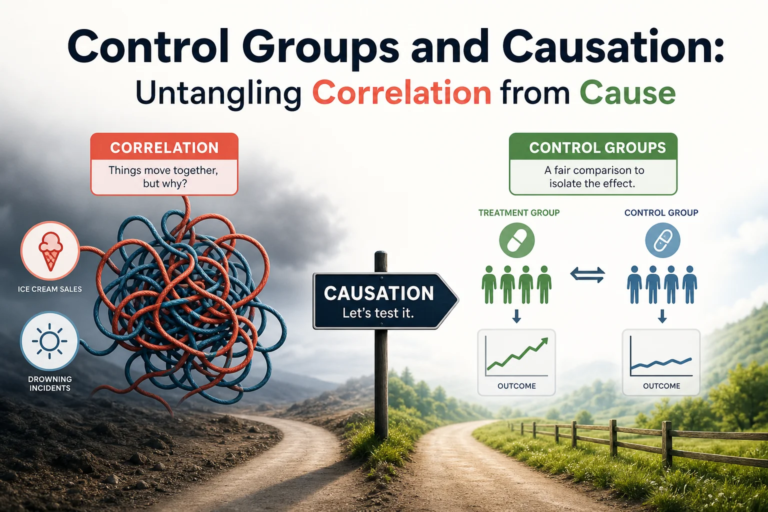
In a published study, researchers claimed that there was a strong correlation between ice cream sales and drowning incidents. What they failed to analyze was that both factors were influenced by a third variable: temperature. This example of misinterpreting correlation as causation illustrates a serious mistake in data analysis.
Key Insight:
Consulting with a statistician or taking the time to validate your analytical approaches can significantly reduce errors in interpretation.
Reporting Results: Transparency and Objectivity
The Importance of Reporting Standards
Transparency in reporting is pivotal. One of the common pitfalls in quantitative research and how to avoid them includes selective reporting of results. Researchers sometimes only highlight significant findings while neglecting non-significant ones, which creates a biased view of the study’s outcomes.
Case Study: Selective Reporting in Clinical Trials
A famous case involves a pharmaceutical company that published only the positive results of its drug trials. When negative outcomes were later revealed, the company’s credibility suffered, creating ethical concerns in the field.
Key Insight:
Adhering to reporting standards such as CONSORT (for clinical trials) can help ensure that all relevant results are disclosed, fostering greater transparency.
The Ethical Dimension: Avoiding Ethical Pitfalls
Navigating Ethical Challenges
Ethical considerations form a non-negotiable part of quantitative research. Failing to address ethical guidelines can not only jeopardize a study’s integrity but also harm the research participants involved.
Key Ethical Guidelines:
- Informed Consent – Participants must understand the research and agree to partake.
- Confidentiality – Ensure participants’ privacy is protected.
Case Study: The Stanford Prison Experiment
This infamous psychological study, while groundbreaking, drew severe criticism for ethical violations. Participants were not adequately informed about the extent of potential harm, leading to extreme distress.
Key Insight:
Always prioritize ethical standards in your research design. Regular ethics training can also help researchers navigate complex ethical waters.
Conclusion
Navigating common pitfalls in quantitative research and how to avoid them requires knowledge, awareness, and diligence. By understanding the methodological, sampling, data analysis, reporting, and ethical considerations, researchers can enhance the quality and credibility of their work. Remember, a well-conducted study can ultimately lead to invaluable insights, drive policy changes, and improve real-world outcomes.
FAQs
1. What are sampling biases, and how can they impact research?
Sampling biases occur when a sample does not accurately represent the population, leading to invalid conclusions. Researchers can mitigate this by employing randomized or stratified sampling techniques.
2. How can I choose the right statistical test for my data?
Selecting the appropriate statistical test depends on your data type and the research questions. Consulting a statistician or referring to statistical guidelines can help clarify which tests are appropriate.
3. What ethical considerations should I keep in mind?
Ensure you obtain informed consent from participants, maintain their confidentiality, and be transparent in your research reporting to uphold ethical standards.
4. Why is transparency in reporting results essential?
Transparency allows other researchers to replicate your study, validates your findings, and contributes to the overall trust in the research community.
5. What should I do if I make a mistake during my research?
Acknowledge the mistake, consult with colleagues for insight, and consider adjusting your methods or reporting to ensure accuracy in your findings.
By prioritizing these insights and adhering to best practices, you can navigate the landscape of quantitative research adeptly, avoiding common pitfalls, and ultimately contributing valuable knowledge in your field.
About the Author


The PsyForU Editorial Collective is the research and editorial team of PsyForU Research International. The collective prepares educational, psychological, mental-health-awareness, inclusion, neurodiversity, and research-methodology content for students, parents, educators, researchers, and general readers. PsyForU content is intended for awareness, education, and capacity-building and should not be treated as clinical diagnosis, therapy, medical advice, legal advice, or emergency mental-health support.