Introduction
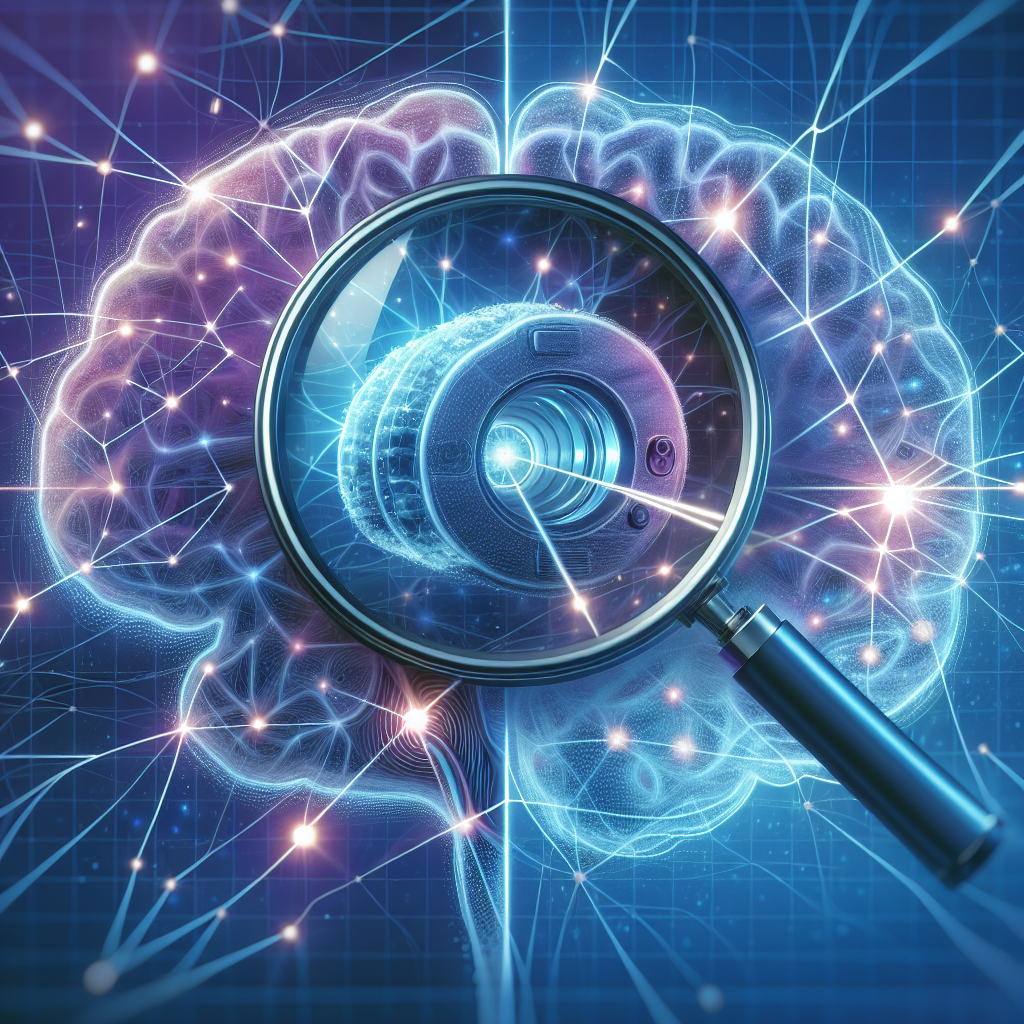
Imagine being able to peek inside the human brain and understand its intricate web of connections. What if we could comprehend not just how individual neurons operate but also how they coordinate to create thoughts, feelings, and actions? Exploring Connectivity: How fMRI Sheds Light on Brain Networks delves into this fascinating realm, where innovative technology meets the complexities of the human mind. Functional Magnetic Resonance Imaging (fMRI) is revolutionizing neuroscience, providing insights into brain networks that were previously unfathomable. Understanding these networks could pave the way for groundbreaking advancements in mental health, cognitive enhancement, and even artificial intelligence.
The Basics of fMRI
What is fMRI?
Functional Magnetic Resonance Imaging (fMRI) is a non-invasive imaging technique used to measure and map brain activity. It detects changes in blood flow, based on the premise that neuronal activity increases local blood flow to meet metabolic demands. This technique has become crucial in exploring connectivity: how fMRI sheds light on brain networks, allowing researchers to observe real-time brain activity in response to various stimuli or tasks.
How does fMRI Work?
fMRI exploits the fact that oxygenated and deoxygenated blood have different magnetic properties. When neurons become active, they consume oxygen, leading to an influx of oxygen-rich blood to the area. By detecting these changes in blood flow, scientists can infer which areas of the brain are working during specific cognitive tasks, emotions, or responses.
Technical Aspects
While fMRI provides rich data for neuroscience, its effectiveness relies on various factors, including:
- Spatial Resolution: The ability to localize brain functions with precision.
- Temporal Resolution: The ability to track changes over time.
- Task Design: Careful crafting of experiments to elicit specific brain responses.
| Factor | Description |
|---|---|
| Spatial Resolution | Measures how accurately different locations in the brain can be differentiated. |
| Temporal Resolution | Involves the time it takes to detect changes in brain activity. |
| Task Design | Refers to how experiments are structured to stimulate certain brain areas. |
Mapping the Brain: Major Brain Networks
The Default Mode Network (DMN)
One of the most intriguing discoveries in the neuroscience of connectivity is the Default Mode Network (DMN). This network is active when the brain is at rest and not engaged in any external tasks. It often involves self-referential thought, daydreaming, and recalling memories.
- Case Study: A study by Raichle et al. (2001) identified the DMN through resting-state fMRI. Participants lying still displayed correlated activity in regions traditionally viewed as disparate, such as the medial prefrontal cortex and posterior cingulate cortex. Understanding the DMN offers insights into conditions like depression and anxiety, where disruptions in self-referential thought can lead to mental health challenges.
The Executive Control Network
Contrasting the DMN, the Executive Control Network (ECN) engages during tasks requiring high cognitive effort. This includes problem-solving, decision-making, and emotional regulation.
- Case Study: Research led by Anguera et al. (2013) explored how the ECN functions during video game training. Participants showed increased connectivity within the ECN, highlighting how fMRI can monitor cognitive improvements through training. Such findings suggest potential applications in cognitive rehabilitation for conditions like ADHD.
The Salience Network
This network plays a vital role in detecting relevant stimuli and determining the appropriate response, integrating emotional and cognitive stimuli.
- Case Study: A groundbreaking study by Menon and Uddin (2010) utilized fMRI to observe the Salience Network in patients with autism. Findings indicated altered connectivity patterns that could inform targeted therapies. These insights are pivotal in applying fMRI research to clinical settings, contributing to tailored interventions for individuals with autism spectrum disorders.
The Role of Connectivity in Mental Health
Depression and Connectivity
fMRI studies have revealed significant differences in the connectivity patterns of those with depression. For instance, individuals may demonstrate reduced connectivity in the DMN, highlighting regions involved in self-reflection and rumination.
- Implications: Insights gained from exploring connectivity: how fMRI sheds light on brain networks can enhance therapeutic approaches. Techniques like Cognitive Behavioral Therapy (CBT) might be tailored more effectively to address specific connectivity deficits.
Anxiety Disorders
Research shows that anxiety disorders often correlate with hyperactivity in the ECN and disrupted DMN connectivity. This disbalance can hinder effective emotional regulation.
- Case Study: In a study by Bishop (2007), patients with anxiety exhibited increased activity in the ECN during rest. Understanding these patterns allows clinicians to target therapies that help restore balance between these networks.
Advancements in Brain-Machine Interfaces
The convergence of fMRI technology with brain-machine interfaces (BMIs) has opened new avenues for research and application. Scientists are developing systems that allow individuals to control external devices using their brain activity.
Real-World Applications
Consider the case of a research team at the University of California, Berkeley, which utilized fMRI to create a brain-controlled prosthetic limb. Participants could visualize movement, enabling the limb to respond accordingly—all monitored through fMRI readings of the motor cortex.
- Such advancements illustrate the practical implications of exploring connectivity: how fMRI sheds light on brain networks, showcasing the translation of neuroscience research into tangible solutions for individuals with mobility impairments.
Understanding Connectivity Through Resting-State fMRI
Resting-state fMRI (rs-fMRI) has emerged as a transformative tool in understanding brain connectivity. Rather than relying on a specific task, researchers observe spontaneous brain activity during rest, allowing for a broader view of how different networks interact.
The Power of Resting-State Networks
Several well-defined resting-state networks have been identified, including the DMN, ECN, and sensorimotor networks. These networks remain active even when individuals are not engaging in a conscious task.
- Case Study: A significant study by Fox et al. (2005) demonstrated that the patterns of connectivity in resting-state networks can predict cognitive performance. By analyzing connectivity strengths, researchers can identify individuals at risk for cognitive decline.
Ethical Considerations and Limitations of fMRI
While fMRI has revolutionized how we understand brain connectivity, ethical considerations and limitations must be acknowledged. The potential for misuse of fMRI data, or over-reliance on the technology, poses risks.
Data Interpretation and Misinterpretation
Connecting observed brain activity to specific thoughts, feelings, or behaviors can lead to oversimplification. Neuroscience must exercise caution in interpreting results, ensuring findings are communicated transparently and responsibly.
Accessibility
fMRI technology is relatively expensive and not universally accessible, creating disparities in research opportunities and healthcare applications. Ensuring equitable access to such groundbreaking technologies is essential for advancing our understanding of brain networks across diverse populations.
Conclusion
The exploration of brain connectivity through fMRI uncovers the intricate networks that govern human thought, emotion, and behavior. As we look to the future, the integration of fMRI findings with clinical practice could revolutionize mental health treatment, cognitive enhancement, and even technological innovations like brain-machine interfaces.
Exploring Connectivity: How fMRI Sheds Light on Brain Networks not only illustrates the complexities of the human brain but also inspires a vision for leveraging this knowledge for human betterment. The journey through the labyrinth of brain connectivity is just beginning, with limitless potential to enrich human experience and revolutionize our understanding of the mind.
FAQs
1. What is the primary benefit of using fMRI in neuroscience research?
fMRI allows researchers to visualize real-time brain activity, revealing how different areas of the brain communicate during various tasks, which is pivotal in understanding complex neural processes.
2. How does resting-state fMRI differ from traditional fMRI?
Resting-state fMRI measures brain activity while a participant is not engaged in any specific task, illuminating spontaneous brain activity and network interactions rather than task-specific responses.
3. Can fMRI be used to diagnose mental health disorders?
While fMRI can provide insights into brain connectivity patterns associated with various mental health conditions, it is not typically used as a standalone diagnostic tool. It complements clinical assessments and interviews.
4. What ethical concerns surround the use of fMRI?
Ethical concerns include the potential misinterpretation of results, privacy issues regarding brain data, and the risk of creating inequalities in access to this technology.
5. How can fMRI findings be applied in clinical settings?
Insights from fMRI studies can inform customized treatment strategies for mental health conditions, guide cognitive rehabilitation exercises, and enhance our understanding of various neurodevelopmental disorders.
By merging fascinating advancements in technology with robust research, exploring connectivity: how fMRI sheds light on brain networks fosters a deeper understanding of the brain’s workings and paves the way for innovative strategies in neuroscience and related fields.
About the Author


The PsyForU Editorial Collective is the research and editorial team of PsyForU Research International. The collective prepares educational, psychological, mental-health-awareness, inclusion, neurodiversity, and research-methodology content for students, parents, educators, researchers, and general readers. PsyForU content is intended for awareness, education, and capacity-building and should not be treated as clinical diagnosis, therapy, medical advice, legal advice, or emergency mental-health support.