Find Your Calm: Essential Meditation Tips for New Practitioners
Introduction
In today’s fast-paced world, stress seems to be an unwelcome companion for many of us. The hustle and bustle of daily life can often leave our minds racing and our bodies tense. But what if you could harness a simple practice to reclaim your peace? Enter meditation—a powerful tool designed to help you "find your calm." If you’re a new practitioner wondering how to get started, you’re in the right place. In this guide, we will explore simple meditation tips that can lead you to inner tranquility and improved well-being.
Understanding Meditation: A Quick Overview
Meditation is not merely sitting cross-legged and chanting; it’s so much more. Rooted in ancient traditions, modern meditation has become a versatile practice with various styles—mindfulness, guided meditation, and loving-kindness, to name a few. Each method offers its own set of benefits.
Why Meditation Matters for New Practitioners
Many are overwhelmed by the sheer amount of information available on meditation. Yet, at its core, meditation serves as a gateway to self-awareness and emotional well-being. Studies show that regular practice can reduce stress, improve focus, and enhance overall mental health. As we delve deeper into our exploration of meditation, keep in mind the goal: to “find your calm.”
Simple Meditation Techniques to Get You Started
1. Start Small: The Power of Just Five Minutes
For new practitioners, the idea of meditating for long stretches can feel daunting. So why not begin with just five minutes?
Case Study: Sarah’s Five-Minute Journey
Sarah, a busy marketing manager, found herself overwhelmed by deadlines and constant notifications. By setting aside just five minutes a day to meditate, she gradually built her focus and reduced her stress levels. The key for her was to treat these five minutes as sacred—a commitment to herself.
2. Choose the Right Environment
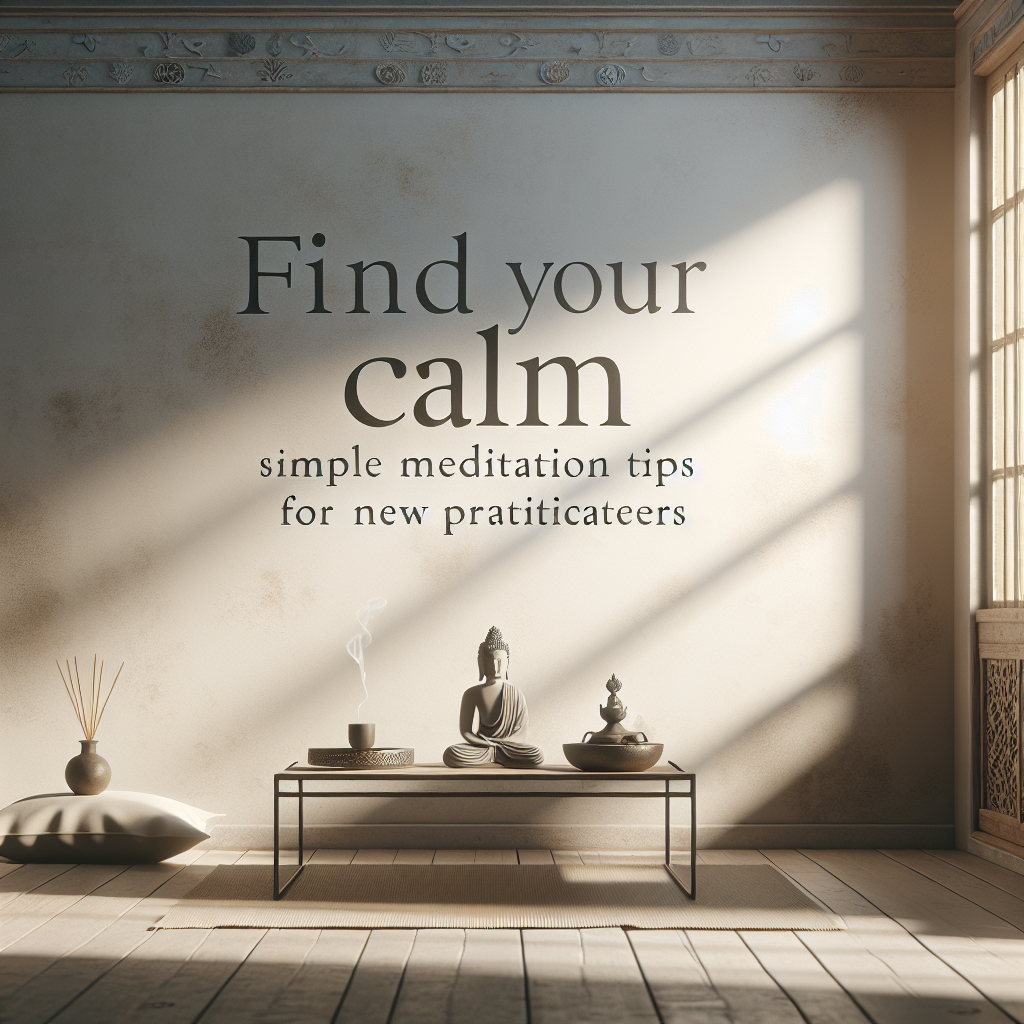
Creating a calming space can significantly elevate your meditation experience. Choose a spot that feels peaceful, whether it’s a corner of your room or a serene outdoor setting.
Table 1: Ideal Meditation Environment Attributes
| Attribute | Description |
|---|---|
| Quietness | Minimized distractions |
| Comfort | A soft mat or cushion to sit on |
| Lighting | Dimming the lights to create a soothing atmosphere |
| Aroma | Use calming scents like lavender or sandalwood |
3. Breath Awareness: Your Anchor
One of the simplest meditation tips is focusing on your breathing. This technique can help center your mind and body.
How to Practice Breath Awareness
- Find your calm by sitting comfortably.
- Close your eyes and take a deep breath in through your nose.
- Exhale slowly through your mouth.
- Repeat this process, bringing your focus back to your breath whenever your mind wanders.
Analysis: The Science Behind Breath Awareness
Research indicates that breathing exercises can lower cortisol levels, the hormone associated with stress. By focusing on your breath, you inherently shift your mind away from stressors.
4. Guided Meditation: A Helping Hand
If sitting in silence feels too challenging initially, consider guided meditations. Many apps and online resources are available, offering meditations tailored to your specific needs.
Case Study: Tom’s Guided Experience
Tom, a new meditator with a wandering mind, turned to a popular meditation app with guided sessions. These guided paths helped him channel his thoughts and focus better. As he progressed, he felt empowered to transition to unguided sessions.
5. Establish a Routine
Like any new habit, consistency is key in meditation. Find a time that works for you—whether it’s first thing in the morning, during lunch breaks, or before bed.
Creating a Meditation Calendar
Table 2: Sample Meditation Routine Calendar
| Day | Time | Duration | Type of Meditation |
|---|---|---|---|
| Monday | 7:00 AM | 5 mins | Breath Awareness |
| Tuesday | 6:30 PM | 10 mins | Guided Meditation |
| Wednesday | 8:00 PM | 5 mins | Loving-Kindness |
| Thursday | 7:00 AM | 10 mins | Body Scan |
| Friday | 6:30 PM | 5 mins | Breath Awareness |
6. Embrace the Journey: Be Patient
Meditation is a skill that requires practice and patience. There will be days when you feel connected, and others when your mind races. Both experiences are part of the process.
Case Study: Jenny’s Progression
Jenny struggled with feelings of self-doubt during her practice. Over three months, she embraced her journey, learning to accept her distractions as part of her growth. By focusing on her progress rather than perfection, Jenny found deeper satisfaction in her sessions.
Tips for Maintaining Your Meditation Practice
- Track Your Progress: Maintain a journal to reflect on your experiences and feelings after each session.
- Find a Community: Join local meditation groups or online forums to connect with other practitioners.
- Mix It Up: Try different styles and techniques to find what resonates with you to “find your calm.”
Conclusion
Meditation is a journey—a journey towards finding your inner peace and calm amid chaos. As you embark on this path, remember that every moment spent meditating is a step towards better mental health. With a commitment to shorter practices, creating a peaceful environment, focusing on breath, and having patience with yourself, you’ll be well on your way to mastering simple meditation techniques.
Inspire Yourself Daily
Today is the perfect day to start. So, find your calm with these simple meditation tips, and embrace the tranquility that begins to unfold in your life.
FAQs
1. How long should I meditate as a beginner?
It’s best to start with 5-10 minutes per day. As you become more comfortable, gradually lengthen your sessions.
2. What should I do if I can’t concentrate?
It’s normal for your mind to wander. Simply acknowledge the distraction and gently bring your focus back to your breath.
3. Do I need special equipment to meditate?
No special equipment is necessary. Just a quiet space and a comfortable position are all you need to find your calm.
4. Can I meditate while lying down?
Yes, but be cautious, as lying down might make you fall asleep. Ensure you’re in a comfortable position that keeps you alert.
5. What is the best time of day to meditate?
Choose a time that fits your schedule best, whether that’s morning, afternoon, or evening. The most important thing is consistency.
By embracing meditation and these simple tips, new practitioners can “find your calm” in a world filled with distractions. Share your meditation journey and inspire others to join you on this enlightening path!
About the Author