Introduction
In a world where crime often steals headlines, the critical work of criminal profilers plays a vital role in bringing justice. Yet, within this high-stakes arena, one aspect remains glaringly evident—the lack of female representation. The journey of women in criminal profiling highlights not just their struggles but also their triumphs as they break barriers in a male-dominated field. This article explores the evolution, impact, and pioneering contributions of women in this essential domain, aiming to inspire and empower future generations.
The Landscape of Criminal Profiling
Understanding Criminal Profiling
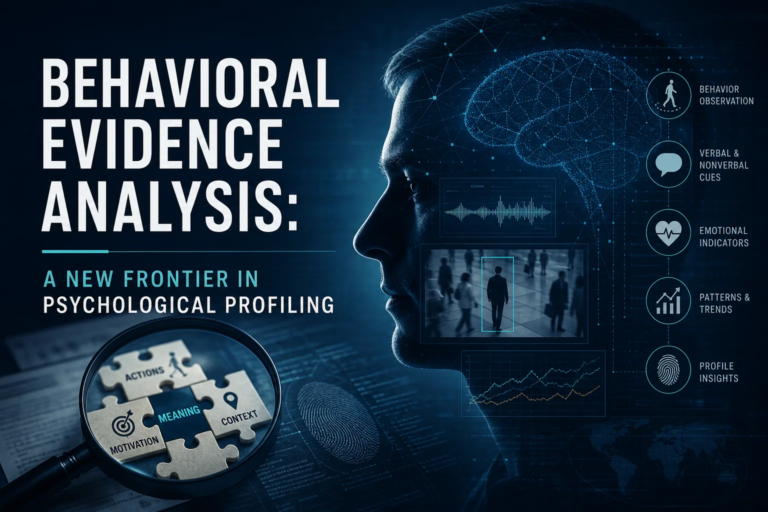
Criminal profiling combines psychology, forensic science, and investigative techniques to identify suspects. It’s a tool used by law enforcement agencies worldwide, making it integral to modern criminal investigations. However, the question arises: who steers this pivotal practice?
Historical Context of Gender in Profiling
Historically, professions related to law enforcement and criminal justice have skewed male, often overlooking the unique insights women can provide. Despite this trend, a growing number of women are emerging as formidable forces in criminal profiling.
Pioneering Women in Criminal Profiling
Case Study: Dr. Ann Burgess
Dr. Ann Burgess is a shining example of a woman making waves in criminal profiling. As a pioneer in the field, her research on sexual violence and victimology has transformed our understanding of crime. Her collaboration with the FBI helped develop the Behavioral Science Unit, emphasizing how women’s insights are crucial in profiling sexual offenders.
Analysis: Dr. Burgess’s work illustrates the vital role that female experts can play in a predominantly male-driven field. She not only contributed valuable research but also opened doors for future female profilers.
Breaking Through Barriers: The Case of Jennifer Crown
Jennifer Crown, another trailblazer, brought her unique perspective from a background in psychology to criminal profiling. Working on high-profile cases, her intuition and attention to detail led to significant breakthroughs.
Analysis: Crown’s journey underscores how women’s experiences can uniquely inform approaches to criminal profiling, challenging existing paradigms and enriching the field.
The Current State of Women in Criminal Profiling
Statistics and Trends
Recent studies reveal that women comprise only about 15-20% of professionals in criminal profiling. While these numbers indicate a male-dominated landscape, they also show a slow but steady increase in female participation over the past two decades.
| Year | Percentage of Women in Profiling |
|---|---|
| 2000 | 10% |
| 2010 | 15% |
| 2020 | 18% |
| 2023 | 20% |
The Impact of Gender Diversity
Research consistently shows that gender diverse teams yield better results in investigative outcomes. The perspectives that women bring—empathy, communication, and collaborative problem-solving—are essential in understanding criminal behavior.
Inspiring Future Generations
Mentorship Programs
Startups and established organizations are increasingly recognizing the importance of mentorship for women in criminal profiling. Programs that connect seasoned profilers with aspiring female professionals are vital in breaking down barriers.
Educational Opportunities and Training
Universities have started forming specialized programs in criminal psychology and profiling, encouraging more female students to pursue careers in this domain. Scholarships targeting women aim to bolster their representation, showing a commitment to diversity.
Challenges Women Face in the Field
Despite progress, women in criminal profiling face unique challenges, including biased perceptions and lack of visibility.
Imposter Syndrome
Many women experience imposter syndrome, doubting their capabilities despite their qualifications. Creating a supportive environment where female profilers can share their experiences is essential for overcoming these internal barriers.
Balancing Work-Life Dynamics
The demanding nature of profiling work often poses challenges for women, particularly those with families. Companies offering flexible work arrangements can significantly improve retention and satisfaction among female profilers.
Conclusion
The narrative surrounding women in criminal profiling is one of resilience and empowerment. As they continue to break barriers in this historically male-dominated field, their contributions are proving invaluable to law enforcement and society at large.
For aspiring female profilers, remember: your voice matters, your perspective matters, and your journey can inspire a new generation. The future of criminal profiling is bright, and the growing presence of women in the field will only bring richer, more nuanced approaches to solving crimes.
FAQs
1. What role do women play in criminal profiling?
Women are increasingly contributing unique insights that enhance the understanding of criminal behavior, offering perspectives that improve profiling accuracy and effectiveness.
2. Are there mentorship programs for women interested in criminal profiling?
Yes, various organizations and universities offer mentorship programs designed to connect aspiring female profilers with experienced professionals in the field.
3. What are the common challenges women face in criminal profiling?
Women often deal with biases, imposter syndrome, and work-life balance challenges in a demanding field that has historically been male-dominated.
4. How can aspiring female profilers prepare for a career in this field?
Pursuing education in criminal psychology, seeking mentorship, and gaining experience through internships are essential steps for aspiring female profilers.
5. What impact does gender diversity have on criminal profiling teams?
Gender diversity fosters better communication and problem-solving, leading to more effective profiling and investigative outcomes.
In the dynamic field of criminal profiling, the strides that women are making today are breaking barriers and paving a path for future generations. Let’s continue to support and celebrate their contributions, fostering an environment where everyone can thrive.
About the Author


The PsyForU Editorial Collective is the research and editorial team of PsyForU Research International. The collective prepares educational, psychological, mental-health-awareness, inclusion, neurodiversity, and research-methodology content for students, parents, educators, researchers, and general readers. PsyForU content is intended for awareness, education, and capacity-building and should not be treated as clinical diagnosis, therapy, medical advice, legal advice, or emergency mental-health support.